AutoPly Product Categories
-

AutoPly Insulation Kits
AutoPly Insulation Kits

Popular AutoPly Products
-
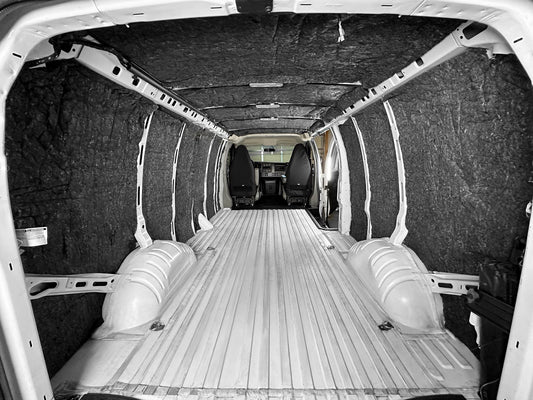
Chevy Express & GMC Savana Cargo Van Insulation Kit
Regular price From: $550.00Regular priceUnit price percheck_box Ships from Manufacturer Ships within 1-2 business days.
Vendor:
-
Ford Transit Cargo Van Insulation Kit
Regular price From: $250.00Regular priceUnit price percheck_box Ships from Manufacturer Ships within 1-2 business days.
Vendor:
-
Ford Transit Connect Cargo Van Insulation Kit
Regular price From: $305.00Regular priceUnit price percheck_box Ships from Manufacturer Ships within 1-2 business days.
Vendor:
-
Mercedes Sprinter Cargo Van Insulation Kit
Regular price From: $269.00Regular priceUnit price percheck_box Ships from Manufacturer Ships within 1-2 business days.
Vendor:
-
RAM ProMaster Cargo Van Insulation Kit
Regular price From: $269.00Regular priceUnit price percheck_box Ships from Manufacturer Ships within 1-2 business days.
Vendor:
-
RAM ProMaster City Cargo Van Insulation Kit
Regular price From: $295.00Regular priceUnit price percheck_box Ships from Manufacturer Ships within 1-2 business days.
Vendor:
-
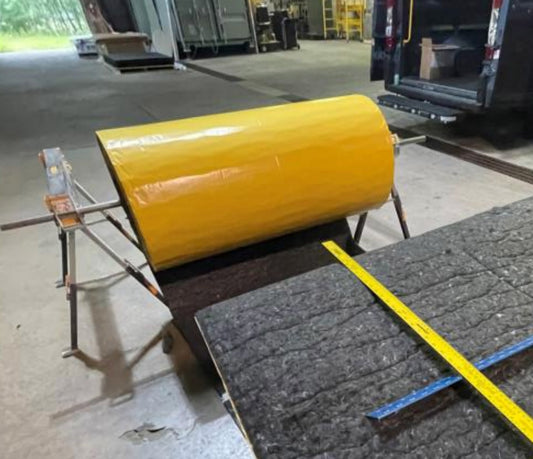
Bulk Roll Cargo Van Insulation - 60" W x 52' L
Regular price From: $500.00Regular priceUnit price per$515.00Sale price From: $500.00check_box Ships from Manufacturer Ships within 1-2 business days.
Vendor:
Sale


Other AutoPly Resources


AutoPly Insulation by Van Model
- Ford Transit Insulation Kits — available in all wheelbase and roof height configurations
- Ford Transit Connect Insulation Kits
- RAM ProMaster Insulation Kits
- RAM ProMaster City Insulation Kits
- Mercedes Sprinter Insulation Kits
- Chevrolet Express / GMC Savana Insulation Kits
Fitment tip: AutoPly kits are matched to your van's specific wheelbase (in inches) and roof height — not just the model name. Confirm both before ordering. If you're unsure which kit matches your van's exact configuration, contact our team before placing your order. Getting the configuration right upfront avoids the most common fitment issues.
About AutoPly
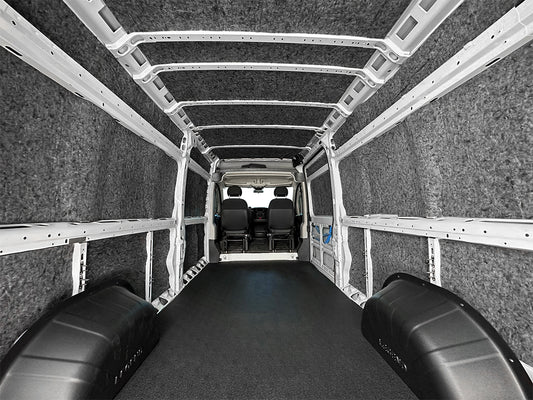
AutoPly describes itself as a turnkey aftermarket insulation systems supplier for vans, work trucks, and RVs. The company's approach is to solve the single biggest frustration with van insulation: the time and expertise required to measure, cut, and fit raw insulation material to the complex geometry of a cargo van interior. A bare metal van interior has ribs, curves, door cutouts, wheel wells, wiring channels, and dozens of irregular surfaces. Cutting standard insulation rolls to fit all of those shapes precisely — without gaps that become cold bridges and noise paths — is time-consuming and unforgiving.
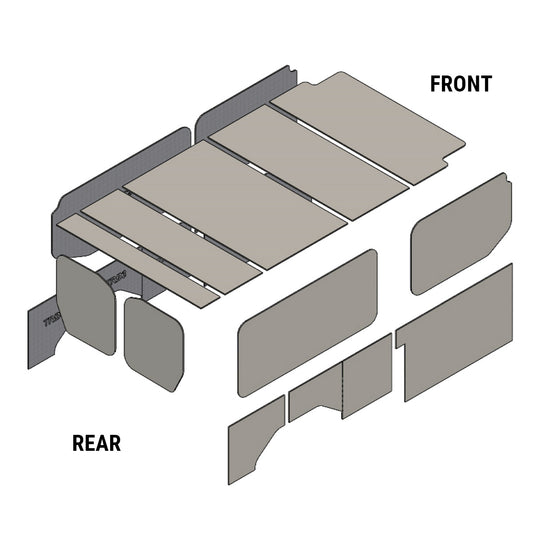
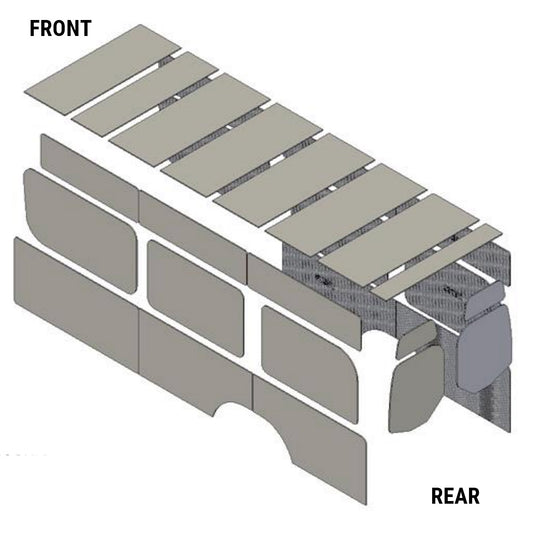
AutoPly's response is CNC-cut, vehicle-specific kits. Every panel in a kit is precision-cut to match its exact location in a specific van model and wheelbase, stamped with an alphanumeric code that corresponds to an installation diagram, and backed with adhesive that activates when you peel the release liner. The result is an insulation install that most builders complete in a few hours rather than a full day, with consistent coverage and no gaps from imprecise cuts.
The material itself is non-woven polyester thermoplastic fiber — the same general category as 3M Thinsulate. It's odorless, allergen-free, fiberglass-free, mold and mildew resistant, and recyclable. It performs across a thermal stability range of -40°F to 250°F. All AutoPly products are made in the USA and meet FMVSS 302 (US) and CMVSS 302 (Canada) fire safety standards, as well as Buy America compliance requirements.
AutoPly vs. Other Van Insulation Approaches
There are several common approaches to van insulation, and AutoPly sits in a specific position among them. Understanding the tradeoffs helps you decide whether AutoPly is the right fit for your build.
AutoPly vs. raw Thinsulate or polyester roll: The material performance is comparable — both are non-woven thermoplastic fiber. The difference is entirely in installation format. Raw rolls require measuring, cutting, and fitting every panel yourself. AutoPly's vehicle-specific kits do that work upfront with CNC precision. If you're insulating one or two vans and want the fastest path to coverage without gaps, AutoPly is worth the premium over raw rolls. If you're insulating multiple non-standard vehicles or want to double up on thickness in specific areas, the bulk roll gives you that flexibility at a lower per-square-foot cost.
AutoPly vs. spray foam: Spray foam provides higher R-value per inch, fills every cavity, and forms a vapor barrier. It also requires ventilation during application, cannot be removed without damaging the van, and permanently commits the van to that configuration. AutoPly panels are reversible — they peel off if you need to access wiring or repurpose the van. For lease vehicles, fleet vehicles with rotating purposes, or anyone uncertain about their long-term van plans, AutoPly's removability is a real advantage.
AutoPly vs. rigid foam board: Rigid foam (XPS, polyiso) has excellent R-values and handles moisture well, but requires cutting to fit every irregular surface, won't conform to curved panels, and leaves gaps at ribs and edges unless supplemented with spray foam. AutoPly's flexible material conforms to curved surfaces and fits tightly around ribs when applied correctly, achieving better gap-free coverage in complex areas like the ceiling and upper wall sections.
AutoPly as a base layer: Many builders use AutoPly as a first layer over bare metal, then add additional insulation on top. AutoPly's thin profile (0.5" or 1.0") leaves room for additional materials without eating significantly into cargo space, and its adhesive backing keeps it securely against the metal while other layers are added.
Frequently Asked Questions — AutoPly
What material is AutoPly insulation made from?
Non-woven polyester thermoplastic fiber — not foam, not fiberglass. Polyester insulation is odorless, allergen-free, fiberglass-free, mold and mildew resistant, and recyclable. The adhesive is a low-VOC, solvent-free acrylic with a glassine paper release liner — no spray adhesives required during installation.
What is the difference between AutoPly's 0.5-inch and 1.0-inch kits?
The 0.5-inch kit (R2.0) is the right choice for noise reduction and moderate temperature improvement, or where interior clearance is a concern. The 1.0-inch kit (R4.0) provides meaningfully better thermal performance for extreme climates, climate-sensitive cargo, or builds where maximum insulation in a thin profile is the priority. Both thicknesses use the same material, the same installation process, and the same vehicle-specific pre-cut patterns.
What is the difference between a full kit, a ceiling-only kit, and a bulk roll?
A full kit covers ceiling, walls, and doors — pre-cut to your specific van model and configuration. A ceiling-only kit covers just the roof, which is the highest-impact single surface for both heat and noise. The bulk roll (60" wide x 52' long) is universal and uncut — for non-standard configurations, additional coverage, or builders who prefer to cut their own panels. Full and ceiling-only kits ship free.
How does AutoPly compare to Thinsulate or spray foam?
AutoPly and Thinsulate are both non-woven thermoplastic fiber and perform comparably — the difference is format. AutoPly's CNC pre-cut, labeled kits install faster and more consistently than cutting raw Thinsulate rolls yourself. Spray foam offers higher R-value per inch but is permanent and can't be removed. AutoPly panels peel off cleanly, making them better for lease vehicles or builds that may change. See the full comparison section above for more detail.
Does AutoPly prevent condensation and mold?
AutoPly polyester is mold and mildew resistant and will not absorb moisture. For best results, apply panels flush to the metal with no air gaps. In very cold or humid climates, some builders first apply thin closed-cell foam against the metal as a vapor barrier, then add AutoPly panels on top for additional thermal and acoustic performance.
How do I make sure I'm ordering the right AutoPly kit?
AutoPly kits are matched to your van's make, model, wheelbase in inches, and roof height — not just the model name. This is the most common source of fitment issues. Confirm your wheelbase and roof height from your door jamb sticker or VIN before ordering. If you're unsure, contact our team before placing the order — it's much easier to get it right upfront than to return a large kit after the fact.
What vans does AutoPly make insulation kits for?
AutoPly makes vehicle-specific kits for the Ford Transit (all wheelbases and roof heights), Ford Transit Connect, RAM ProMaster, RAM ProMaster City, Mercedes Sprinter, Chevrolet Express, and GMC Savana. A universal bulk roll is available for any large cargo van not covered by a specific kit.
Trusted By The Pros At